



The paradox of Malaysian football: The more Johor Darul dominates, the more the national team declines.

19/08/2026 10:00:19 GameGladiator
 0
0  0
0As the leading club in Southeast Asia, Johor Darul Takzim (JDT) flies the flag for the region, but the same cannot be said for Malaysia's national squad. Strangely, the stronger this team becomes, the more the "Harimau Malaya" appears to… deteriorate.
In the 2025-26 season, JDT won the Malaysia Super League with a record of 23 wins and 1 draw in 24 matches, scoring an astonishing 117 goals while conceding only 10. They even advanced to the quarterfinals of the 2025-26 AFC Champions League Elite. However, this club's absolute dominance raises difficult questions about the competitiveness of the national league, the development opportunities for local players, and the ability to assemble the best squad for the Malaysian national team.
With JDT being so overpowering, what is left to compete for in the Malaysia Super League?
The 2025-26 Malaysia Super League title marks JDT's 12th consecutive championship. More notably, the gap between JDT and the rest is enormous. For instance, last season they collected 70 points from 24 matches, finishing 17 and 18 points ahead of Kuching City and Selangor respectively. They netted 117 goals, while the second-placed team managed only 45. That is a chasm between two different tiers. This is also the fourth straight year JDT has achieved a quadruple: the national league, Charity Shield, Malaysia Cup, and FA Cup.
A national league aiming to attract interest needs close races and strong rivals to challenge the champion, maintaining the sense that nothing is decided before the ball is kicked. When JDT is almost automatically the top contender, the rest of the league must compete for the positions behind them.
This is a concern not only for fans but also for Malaysian players. A young player looking to develop needs to participate in highly competitive matches, face pressure to win, and confront opponents of similar caliber. But when one club is overwhelmingly strong and the gap is too wide, the system risks creating a paradox: JDT can produce very talented players, yet the rest of the league is not strong enough to raise the overall standard. And that is the core issue.
In the 2025-26 season, JDT even reached the quarterfinals of the AFC Champions League Elite after defeating Sanfrecce Hiroshima 3-2 on aggregate in the round of 16. However, JDT's success does not translate into success for the national team.
JDT conflicts with the Malaysian national team
JDT is built to compete at the continental level. To achieve that, they must have a squad of superior quality, and one of the fastest ways is to use foreign players, naturalized talents, or those with international experience. This is entirely reasonable from a professional club perspective. However, the Malaysian national team can only field players eligible to wear the Harimau Malaya jersey.
That gap is becoming increasingly evident. In JDT's lineup, Malaysian players must compete for spots with high-quality foreign imports. This makes JDT stronger but simultaneously reduces the playing time for a portion of local players.
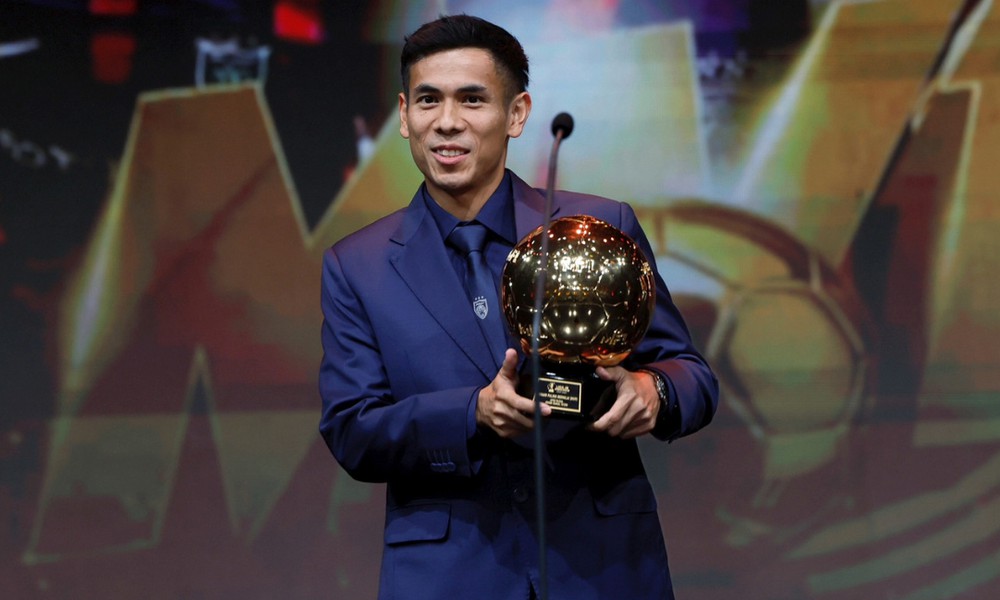
Afiq Fazail received the Malaysia Super League 2025-26 Best Player award, but JDT did not release him for the 2026 ASEAN Cup. Photo: Bernama
Of course, there are still outstanding exceptions. Arif Aiman is the clearest example: He has become one of Asia's most prominent Malaysian players and was once among the three finalists for the AFC Player of the Year award. Afiq Fazail also demonstrates the opposite. The JDT midfielder was just voted MVP of the 2025-26 Malaysia League and also won the Best Midfielder award. In other words, JDT is fully capable of producing quality local players.
But the question remains: How many other Afiq Fazails and Arif Aimans are getting enough playing time to rise? That is the puzzle Malaysian football must face.
After the scandal of illegally naturalizing players, Malaysia entered the 2026 ASEAN Cup under particularly difficult circumstances: They lost several key figures and had to undergo a major overhaul. Meanwhile, JDT released only two players: center-back Ibrahim Manusi and striker Sumareh. A host of domestic stars such as Matthew Davies, Corbin-Ong, Arif Aiman, Afiq Fazail, and Kutty Abba instead joined the club for a summer tour.
Of course, JDT has the right not to release players because the ASEAN Cup is not part of the FIFA calendar. But clearly, when the country's strongest club holds a significant portion of Malaysia's best players, the national team is easily affected if it cannot assemble that full strength.
And that is not solely JDT's fault. It is a problem of the entire system.
Malaysia needs more JDTs
JDT is doing many things that other Malaysian clubs should learn from. They have excellent facilities, a professional operation, clear ambitions, and the ability to compete in the AFC Champions League Elite. If Malaysian football could have three or four clubs reaching even a fraction of JDT's level, the Super League would become far more attractive.
The issue is not that JDT is too strong, but that the rest is not strong enough.
A healthy football ecosystem cannot rely on a single "super club." JDT can continue to dominate Malaysia and even go further in Asia. But alongside that, other clubs must be upgraded, young players need more game time, and the league must create a sufficiently competitive environment for local players to mature.
More importantly, a mechanism is needed to harmonize the interests between clubs and the national team. JDT has the right to pursue its own goals, but Harimau Malaya also needs its best players when entering major tournaments. A national team cannot build a long-term plan if its squad is constantly in flux and dependent on whether key players can be assembled.
Malaysian football needs more JDTs to emerge in Kuala Lumpur, Selangor, Kuching, Sabah, or Terengganu. So that when the national team calls, they will have a whole generation of quality players to choose from.


Wonderfulshortvideo
mbappe news mbappe edit mbappe new shoe boot deal mbappe nike



julian alvarez barcelona news
James Trafford’s big moment in the U21 EURO final 🤯
RODRI BARCELONA transfer barcelona news today rodri to barcelona transfer here we go
gianni infantino and trump drama news
jorge messi death messi news today football news today
jose mourinho netflix documentary pep guardiola mourinho beef mourinho edit
 Links
Links
 Contact